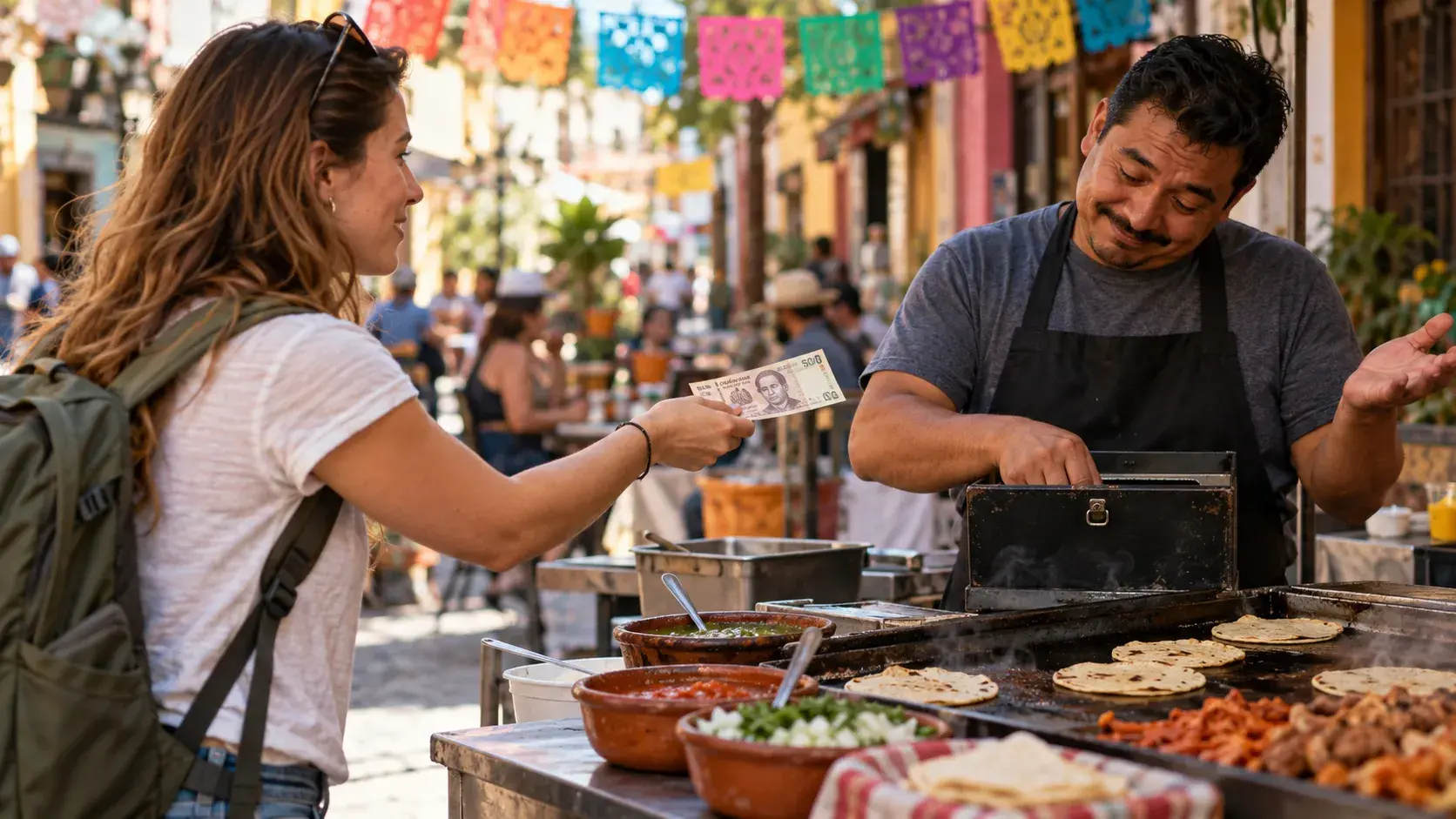
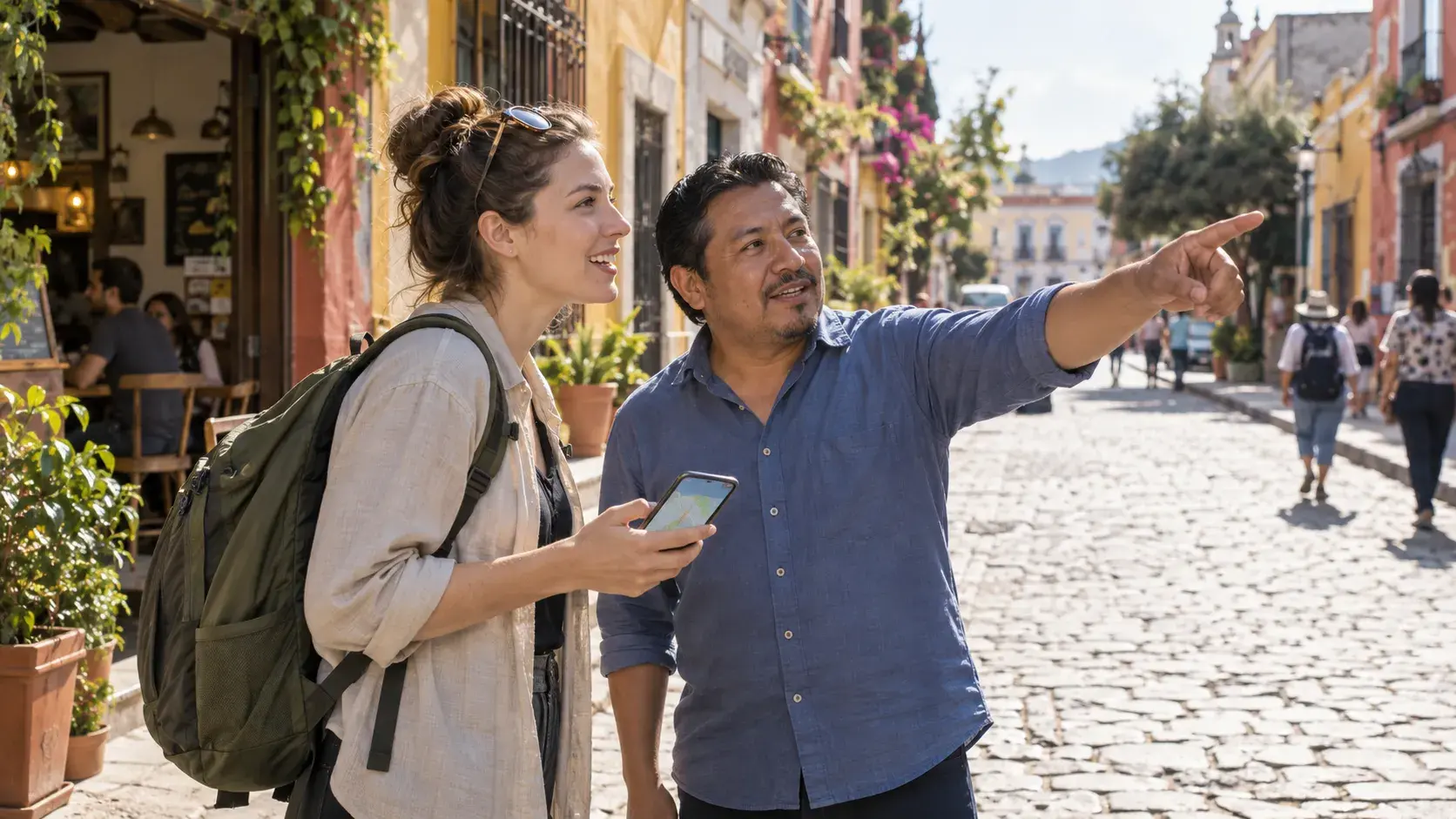
What Does "Mande" Mean in Mexico? How and When to Use It
In Mexico, "¿Mande?" is the polite way to say "Pardon?" or "Yes?" when someone calls you. Here's what it means, when to use it, and why it sounds better than "¿Qué?"
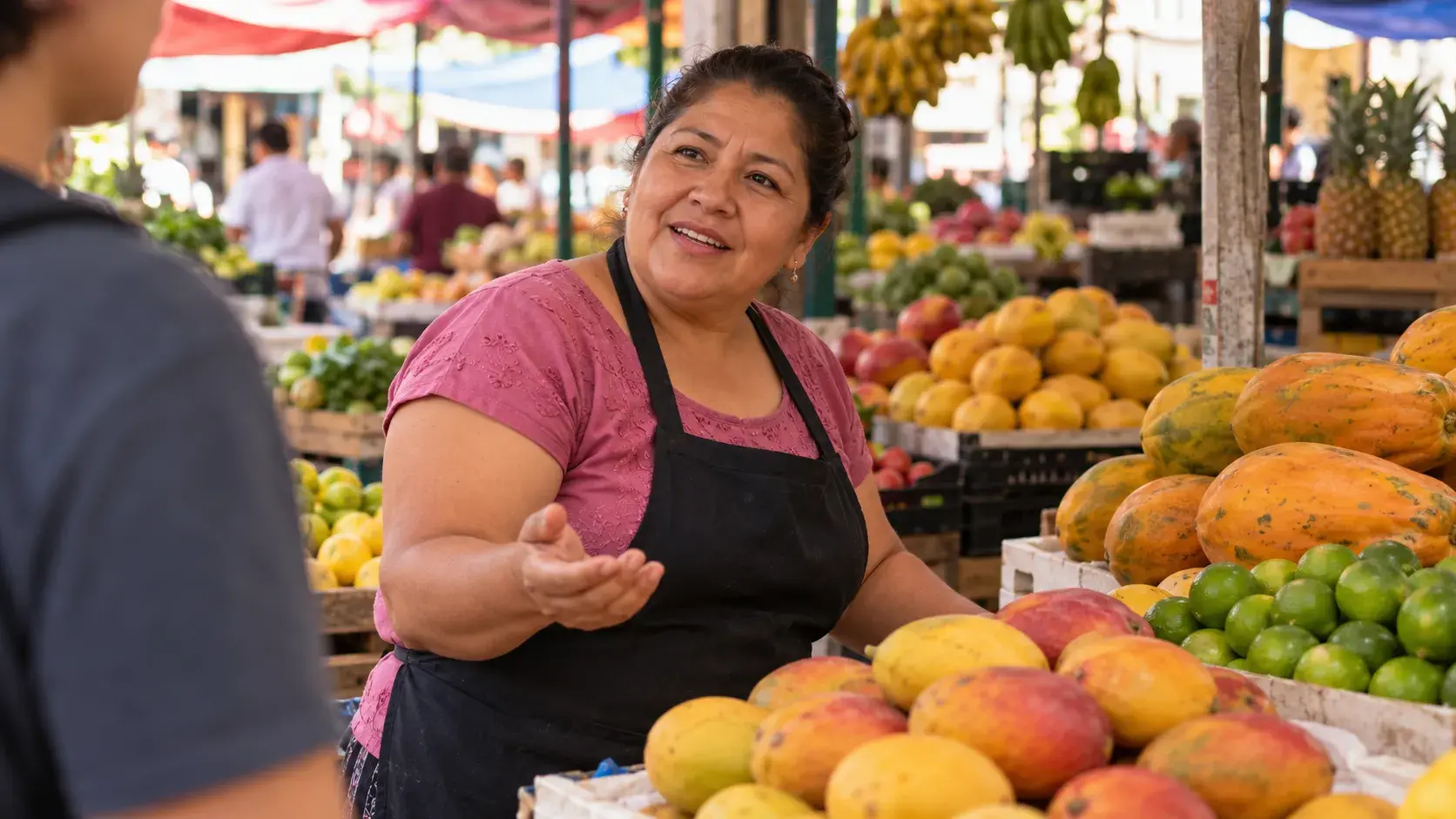
You're at a market in Mexico, the seller says something you don't catch, and you answer "¿Qué?". It works, but a Mexican would more likely say "¿Mande?". It's one of the first words that makes your Spanish sound local instead of textbook.
What "¿Mande?" means
¿Mande? is a polite way to say "Pardon?", "Sorry?" or "Yes?". Mexicans use it in two main situations:
- When they didn't hear or understand you. Like "Pardon?" or "Come again?"
- When someone calls their name. Like "Yes?" or "What can I do for you?"
It's polite, friendly and used by everyone: kids talking to their parents, employees talking to customers, and neighbors talking to each other.
Where the word comes from
Mande comes from the verb mandar (to order or to send). It's often explained as a short form of "mándeme", roughly "at your command." Today nobody thinks of it that way. It's simply the normal, courteous way to answer.
Because it comes from mandar, you'll also hear it with its everyday meaning of "send": "Mándame la ubicación" means "Send me the location." Context makes the difference clear.
¿Mande? vs ¿Qué? vs ¿Cómo?
All three can mean "What?" when you didn't hear, but they don't sound the same in Mexico.
| Word | How it sounds in Mexico | Use it |
|---|---|---|
| ¿Mande? | Polite and warm | Almost anywhere: with strangers, older people, at work |
| ¿Cómo? | Neutral and polite | Anywhere; common across the Spanish-speaking world |
| ¿Perdón? | Polite, a bit formal | With strangers or in shops |
| ¿Qué? | Can sound abrupt or rude | With friends and family; avoid with strangers |
Many Mexicans were taught as children to answer "¿Mande?" instead of "¿Qué?", especially to adults. Using ¿qué? with a stranger isn't a disaster, but ¿mande? makes a better impression.
Dialogue 1: when you didn't hear
Seller: ¿Se lo llevo en bolsa? (Shall I put it in a bag?)
You: ¿Mande? (Pardon?)
Seller: Que si quiere bolsa. (I asked if you want a bag.)
You: Ah, no, así está bien, gracias. (Oh, no, it's fine like this, thanks.)
Notice the reply starts with "Que si…". When Mexicans repeat a question you didn't catch, they often start with que, meaning "I said…".
Dialogue 2: when someone calls you
Neighbor: ¡Señor Mike! (Mr. Mike!)
You: ¿Mande? (Yes?)
Neighbor: Le dejaron un paquete en la entrada. (Someone left you a package at the entrance.)
You: Ah, muchas gracias. (Oh, thank you very much.)
Here ¿mande? doesn't mean you didn't hear. It means "Yes, I'm listening, what is it?"
Other phrases for when you don't understand
¿Mande? works once. If you still don't understand, use one of these:
| Spanish | English | When to use it |
|---|---|---|
| ¿Me lo repite, por favor? | Can you repeat that, please? | After a second miss |
| Más despacio, por favor. | Slower, please. | When people speak fast |
| No le entendí. | I didn't understand you. | Honest and polite |
| ¿Qué significa…? | What does … mean? | For one specific word |
| ¿Me lo puede escribir? | Can you write it for me? | For addresses, names or prices |
For more phrases to keep a conversation going, read how much Spanish you need to travel to Mexico.
Related Mexican words you'll hear
- ¿Bueno? — How Mexicans answer the phone. It means "Hello?", not "good."
- A sus órdenes — "At your service." Shop staff and workers say it often.
- Para servirle — "Happy to help." A common reply to gracias in shops and services.
- Mándame… — "Send me…", as in mándame un mensaje (send me a message).
Should foreigners say "mande"?
Yes. Mexicans usually find it friendly when a foreigner uses ¿mande?, and it sounds natural in any situation. You don't need to use it every time; ¿cómo? and ¿perdón? are also fine. The one to avoid with strangers is a short, flat ¿qué?.
If you're also learning how to handle payments, see what to say when a seller tells you no tengo cambio.
Frequently asked questions
What does "mande" mean in Mexico?
"¿Mande?" means "Pardon?" or "Yes?". Mexicans use it when they didn't hear something or when someone calls their name. It's a polite, everyday word.
Is it rude to say "¿qué?" in Mexico?
Not always, but it can sound abrupt, especially with strangers or older people. "¿Mande?", "¿cómo?" or "¿perdón?" sound more polite.
Is "mande" only used in Mexico?
It's especially typical of Mexico. Spanish speakers from other countries understand it, but many of them say "¿cómo?" or "¿perdón?" instead.
Can a foreigner say "mande"?
Yes. It sounds natural and polite, and Mexicans usually appreciate it. It's a simple way to make your Spanish sound more local.