Your First 30 Days in Mexico City as an Expat: The Spanish You'll Actually Need
Just moved to Mexico City? Here's the Spanish you'll need week by week: getting a SIM, water and gas delivery, trash day, the bank, the pharmacy and your neighbors.
Your first month in Mexico City is less about sightseeing and more about small tasks: getting your phone working, ordering drinking water, figuring out when the trash truck comes and finding a pharmacy. None of it is hard, but almost all of it happens in Spanish, and usually fast.
This guide follows those first 30 days week by week, with the phrases you'll use and the replies you're likely to hear.
Week 1: Phone, cash and getting around
Get a Mexican SIM card
In Mexico a SIM card is called a chip. You can buy one at a carrier store, many convenience stores like Oxxo, or kiosks in malls. Prepaid plans are topped up with a recarga.
| Spanish | English | When to use it |
|---|---|---|
| Quiero un chip prepago. | I want a prepaid SIM. | At the store |
| ¿Qué paquetes tiene? | What plans do you have? | To compare options |
| ¿Cuántos gigas incluye? | How many gigs does it include? | Before you pay |
| ¿Me hace una recarga de doscientos? | Can you top up 200 pesos? | At Oxxo or a small store |
| ¿A qué número? | To which number? | What the cashier will ask you |
Cash and change
Small stands, markets and many taxis are cash only, and big bills cause problems. Keep 20s, 50s and coins handy. If a seller tells you "no tengo cambio", here's what it means and how to respond.
Metro, Metrobús and apps
For the Metro and Metrobús you'll use a rechargeable transit card. Ride-hailing apps are also widely used in the city.
- ¿Dónde recargo la tarjeta? — Where do I top up the card?
- ¿Este va a Insurgentes? — Does this one go to Insurgentes?
- ¿En qué estación me bajo? — Which station do I get off at?
- ¿Ya pasó la estación…? — Did we already pass … station?
Week 2: Running your home
This is the week most expats discover that daily life in a Mexican apartment has its own routines.
Drinking water: the garrafón
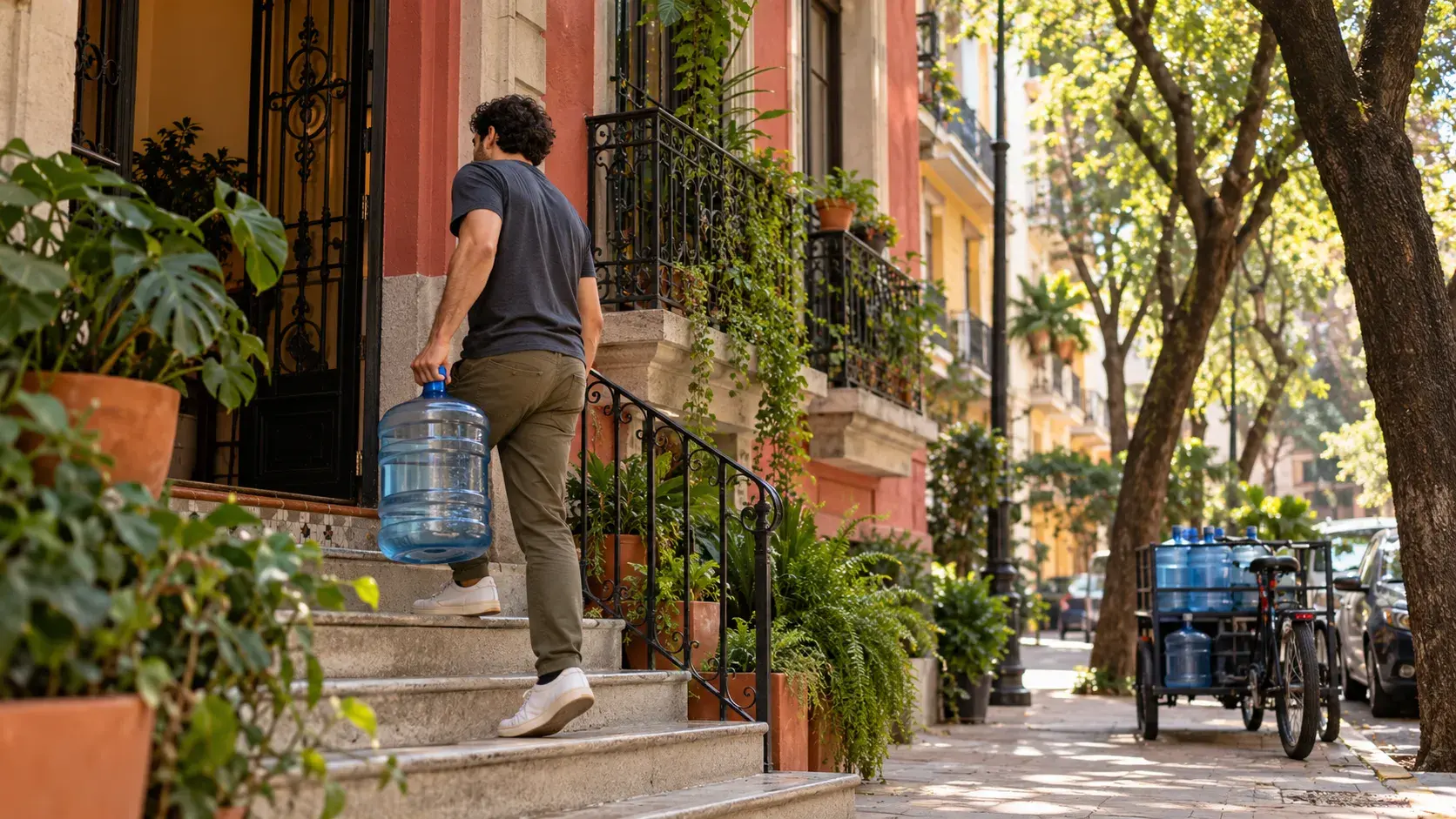
Tap water in Mexico City isn't for drinking. Most people buy 20-liter jugs called garrafones, delivered to the door. You usually return the empty jug and pay only for the water; the first time you may need to buy the jug itself.
| Spanish | English |
|---|---|
| ¿Me trae dos garrafones? | Can you bring me two jugs? |
| Aquí está el envase vacío. | Here's the empty jug. |
| ¿Cuánto es? | How much is it? |
| ¿Qué días pasa por aquí? | What days do you come by here? |
| ¿Me deja su número para pedirle? | Can you leave me your number so I can order? |
Gas
Many apartments use LP gas for the stove and water heater. It comes either in a portable tank (cilindro) or a fixed tank on the roof (estacionario). Ask your landlord which one you have before it runs out in the middle of a shower.
- ¿El gas es de cilindro o estacionario? — Is the gas a portable tank or a fixed tank?
- ¿A quién le pido el gas? — Who do I order gas from?
- Se acabó el gas. — The gas ran out.
- ¿Cuántos litros le cargo? — How many liters should I fill? (what the gas worker may ask)
Trash day
Garbage collection is often announced by a truck or a worker ringing a campana (bell). In Mexico City you're expected to separate your trash, and it's common to give the collectors a small tip.
- ¿Qué días pasa la basura? — What days is trash pickup?
- ¿A qué hora pasa el camión? — What time does the truck come?
- ¿Cómo se separa la basura aquí? — How do you separate the trash here?
- Orgánica / inorgánica — Organic / inorganic
Talking to the building
If you live in a building, you'll deal with the portero or conserje (doorman or caretaker) and the administración (building management).
| Spanish | English | Why it matters |
|---|---|---|
| ¿Quién es el administrador? | Who is the building manager? | For repairs and rules |
| ¿Cuánto es la cuota de mantenimiento? | How much is the maintenance fee? | Sometimes paid by the tenant |
| ¿Me pueden recibir un paquete? | Can you receive a package for me? | Deliveries |
| Hay una fuga en el baño. | There's a leak in the bathroom. | Report problems early |
If something breaks in your apartment, these Spanish phrases for your Airbnb work just as well with a long-term landlord.
Week 3: Errands and paperwork
The bank
Many banks ask for a residency card, so a tourist may not be able to open an account. Ask directly before you go:
- ¿Qué necesito para abrir una cuenta? — What do I need to open an account?
- ¿Puedo abrir una cuenta con pasaporte? — Can I open an account with a passport?
Replies you'll probably hear:
| They say | Meaning |
|---|---|
| Identificación oficial | Official ID (your passport or residency card) |
| Tarjeta de residente | Residency card |
| Comprobante de domicilio | Proof of address |
| RFC | Mexican tax ID |
| Haga una cita | Make an appointment |
Comprobante de domicilio comes up again and again in Mexico. It's usually a recent utility bill, like your electricity bill from CFE, in your name or your landlord's. Ask your landlord early if they can give you a copy.
The pharmacy
Pharmacies are everywhere, and many have a small consultorio (doctor's office) next door with low-cost consultations for minor problems.
- ¿Tiene algo para el dolor de garganta? — Do you have something for a sore throat?
- ¿Necesito receta? — Do I need a prescription?
- ¿Hay doctor en el consultorio? — Is there a doctor in the office?
- ¿Cada cuánto me lo tomo? — How often do I take it?
For anything serious, go to a clinic or hospital, and bring someone who speaks Spanish if you're not confident yet.
Laundry
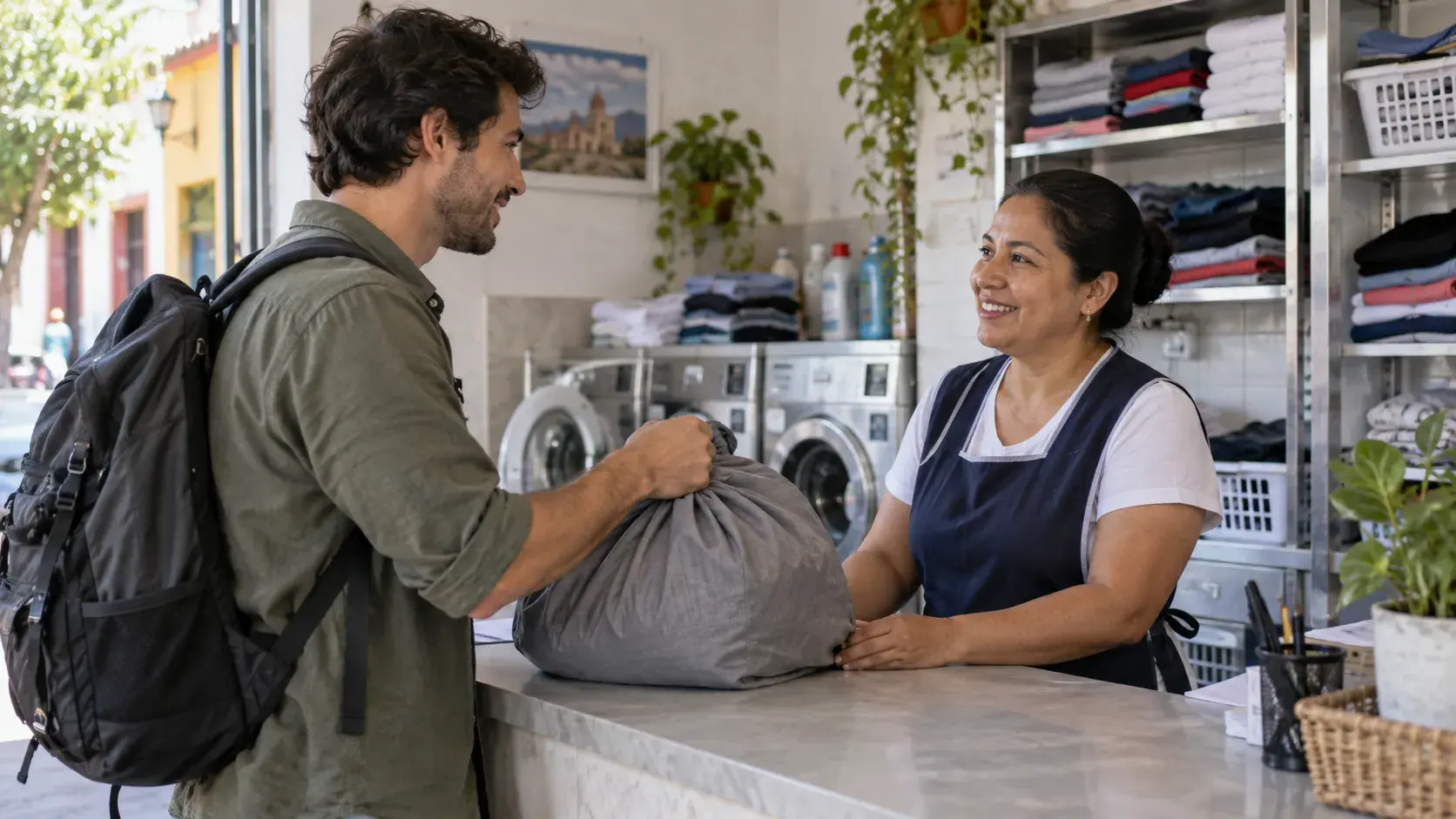
If your apartment has no washer, you'll probably use a lavandería that washes by the kilo. Here's how to use a lavandería in Mexico.
Week 4: Settling in
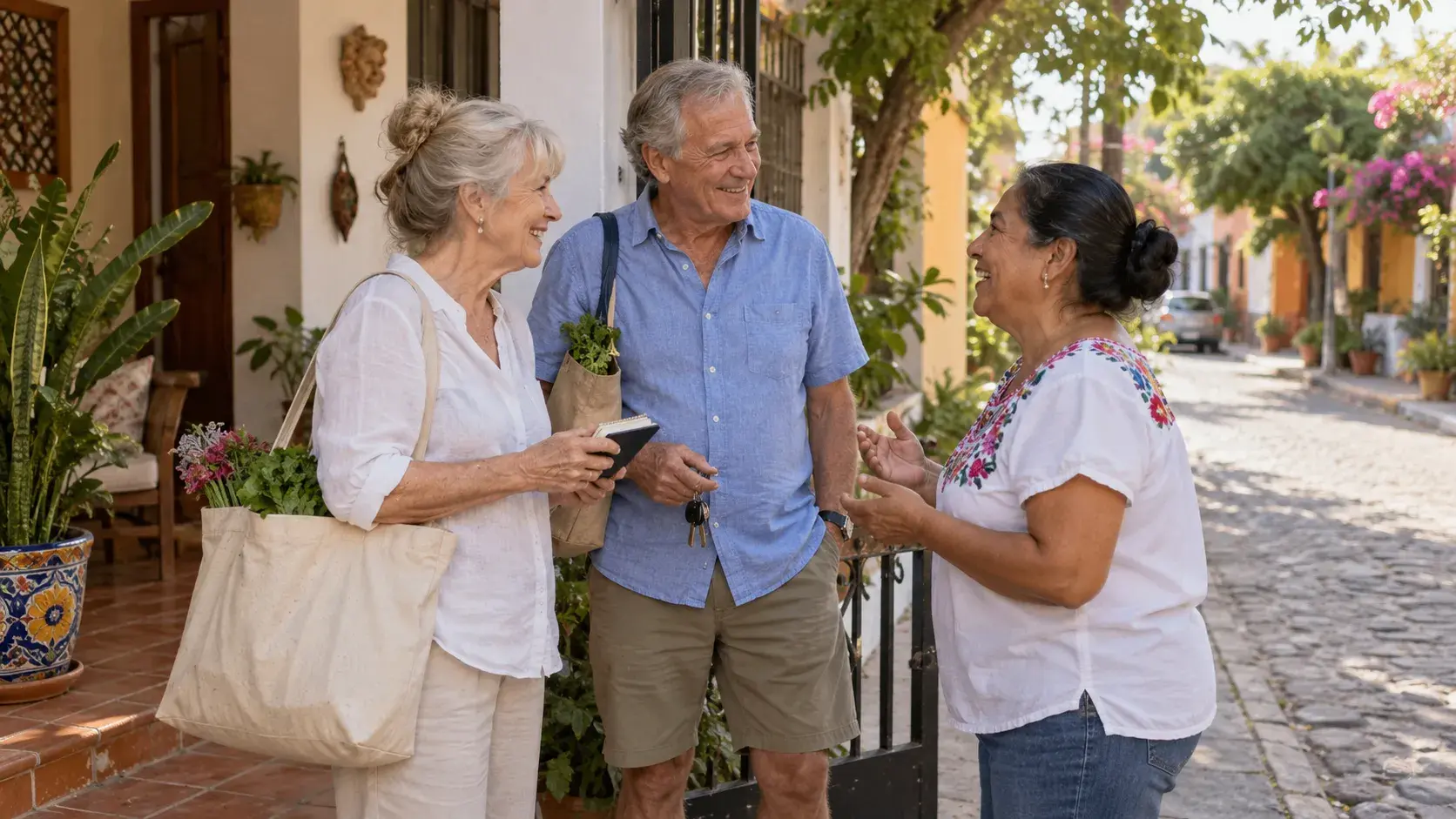
By now the tasks feel familiar. Week 4 is about the small social Spanish that makes the neighborhood feel like home.
Greetings that matter
In Mexico, greeting people is expected, not optional. Say buenos días or buenas tardes to the doorman, the person at the corner store and anyone in the elevator.
- Buenos días. — Good morning.
- Buenas tardes. — Good afternoon (from about noon).
- Provecho. — Enjoy your meal (to people eating, even strangers in a fonda).
- Con permiso. — Excuse me (when you pass or leave).
Your regular places
At the market, the tortillería or your favorite taquería, you'll start seeing the same people. Use it to practice.
Seller: ¿Qué va a llevar, güero? (What are you taking, blondie?)
You: Un kilo de tortillas, por favor. (A kilo of tortillas, please.)
Seller: ¿Algo más? (Anything else?)
You: Es todo, gracias. ¿Abren los domingos? (That's all, thanks. Are you open on Sundays?)
Seller: Sí, hasta las dos. (Yes, until two.)
Güero/güera is a common, friendly way to address someone light-skinned or foreign. It isn't an insult. For more phrases at food stands, see how to order food in Mexico.
Your first-month checklist
| Week | Task | Key phrase |
|---|---|---|
| 1 | Buy a SIM card | Quiero un chip prepago. |
| 1 | Top up your phone | ¿Me hace una recarga? |
| 1 | Learn your transit route | ¿En qué estación me bajo? |
| 2 | Find water delivery | ¿Me trae un garrafón? |
| 2 | Check your gas | ¿Es de cilindro o estacionario? |
| 2 | Learn trash day | ¿Qué días pasa la basura? |
| 3 | Ask about the bank | ¿Qué necesito para abrir una cuenta? |
| 3 | Find a pharmacy | ¿Tiene algo para…? |
| 4 | Greet your neighbors | Buenos días. Provecho. |
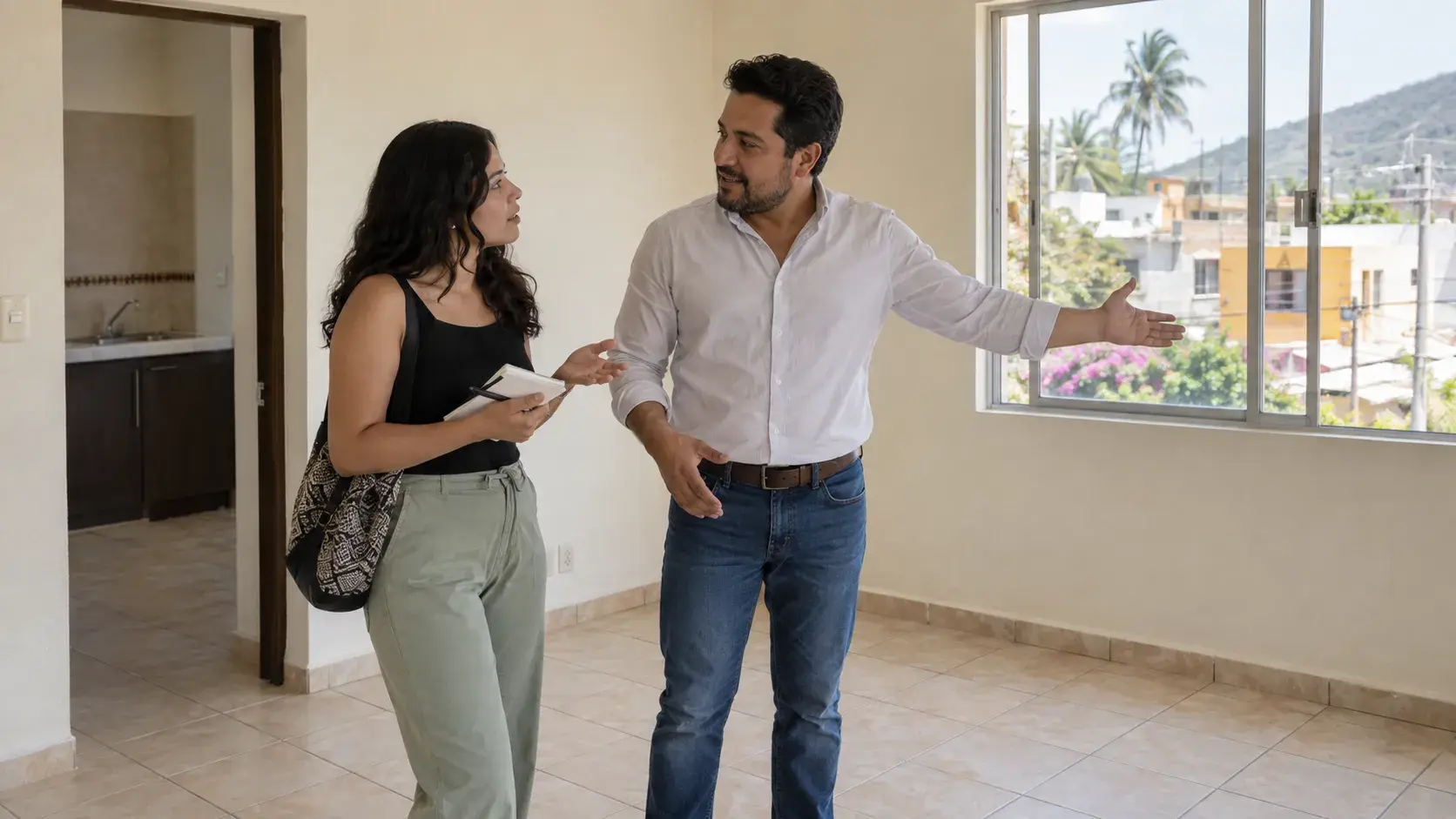
If you're still looking for a place, read the questions to ask before renting an apartment in Mexico and how to read rental listings first. And if you want a structured way to practice speaking before or during your move, here's our Rocket Spanish review for Mexico.
Frequently asked questions
How much Spanish do I need to live in Mexico City?
You can get through your first month with basic phrases for daily tasks: buying a SIM, ordering water and gas, shopping and asking for directions. Many people in tourist areas speak some English, but landlords, delivery workers and small shops usually speak Spanish only.
What is a garrafón in Mexico?
A garrafón is a 20-liter jug of drinking water delivered to your home. Most people in Mexico City use them because tap water isn't for drinking. You usually return the empty jug and pay only for the refill.
What does "comprobante de domicilio" mean?
It means proof of address. In Mexico it's usually a recent utility bill, such as an electricity bill from CFE. Banks and other offices often ask for it.
What is a "chip" in Mexico?
"Chip" is the Mexican word for a SIM card. You can buy a prepaid chip at carrier stores and many convenience stores, and add credit with a "recarga."